For landscaping contractors, municipal maintenance teams, and garden-tool distributors, telescopic pole hedge trimmer kit is not simply a product purchase. It affects operator productivity, spare-parts planning, battery inventory, transport cost, and after-sales workload. This guide explains how to evaluate a 6-in-1 telescopic pole tool set with hedge-trimmer and saw attachments for a commercial order.
1. Start with the work profile, not the catalogue photo
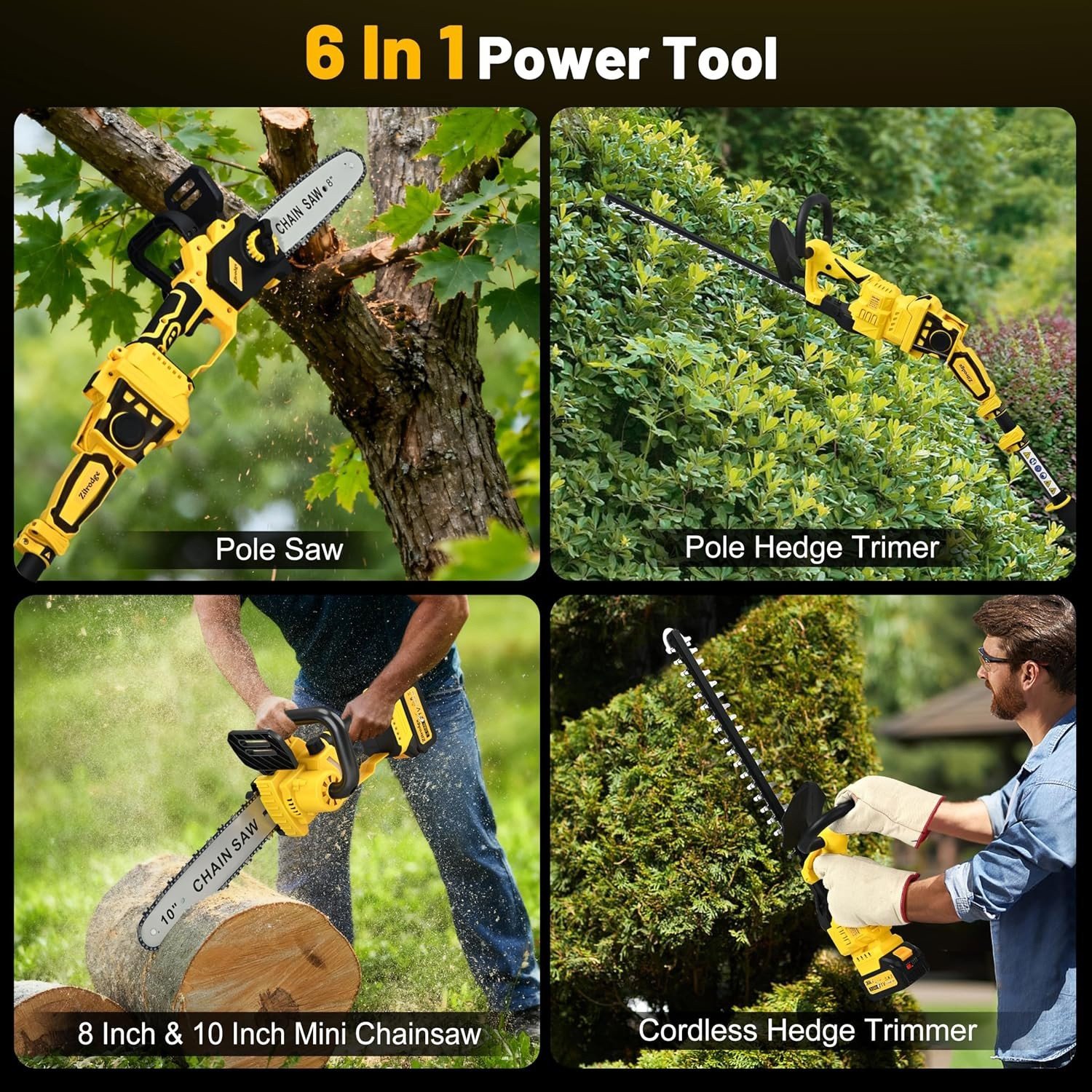
Ask the end user which tasks are performed most often: hedge shaping, high-reach trimming, branch pruning, light cutting, or a combination of these. A 6-in-1 kit can reduce the number of tool platforms a crew manages, but only when the included attachments, reach, battery capacity, and duty cycle match the actual job.
For a bulk order, request a written configuration sheet that lists every included attachment, bar length, blade length, pole range, battery quantity, charger specification, and optional accessory. “6-in-1” should describe a clear bill of materials, not a marketing label alone.
2. Use compliance as a verification workflow
Before placing an order, identify the market where the product will be sold or used and ask the supplier for the documents relevant to that market. Review the document holder, model number, issue date, test laboratory, and whether the tested configuration matches the quoted kit. Battery-powered equipment also needs separate attention to battery transport, charger safety, marking, instructions, and battery-management protections.
- Model-specific test reports and declarations, where applicable
- Product labels, manuals, warning labels, and parts lists in the required language
- Battery and charger specifications, including protection functions and transport documentation
- Traceability records linking the report, the supplied model, and the production batch
3. Evaluate the attachment system as a system
The commercial value of a multi-tool comes from interchangeability. Check how the hedge-trimmer head, pole saw, chainsaw, and other attachments connect; how long changeovers take; whether locking points are protected from wear; and whether the same battery platform works across the quoted tools.
Request a sample or pre-production unit for a practical evaluation. The sample test should include repeated attachment changes, locking checks, overhead trimming, and an inspection after sustained use. A convenient attachment system should not introduce excess play, difficult alignment, or complicated maintenance.
4. Check reach, balance, and fatigue – together
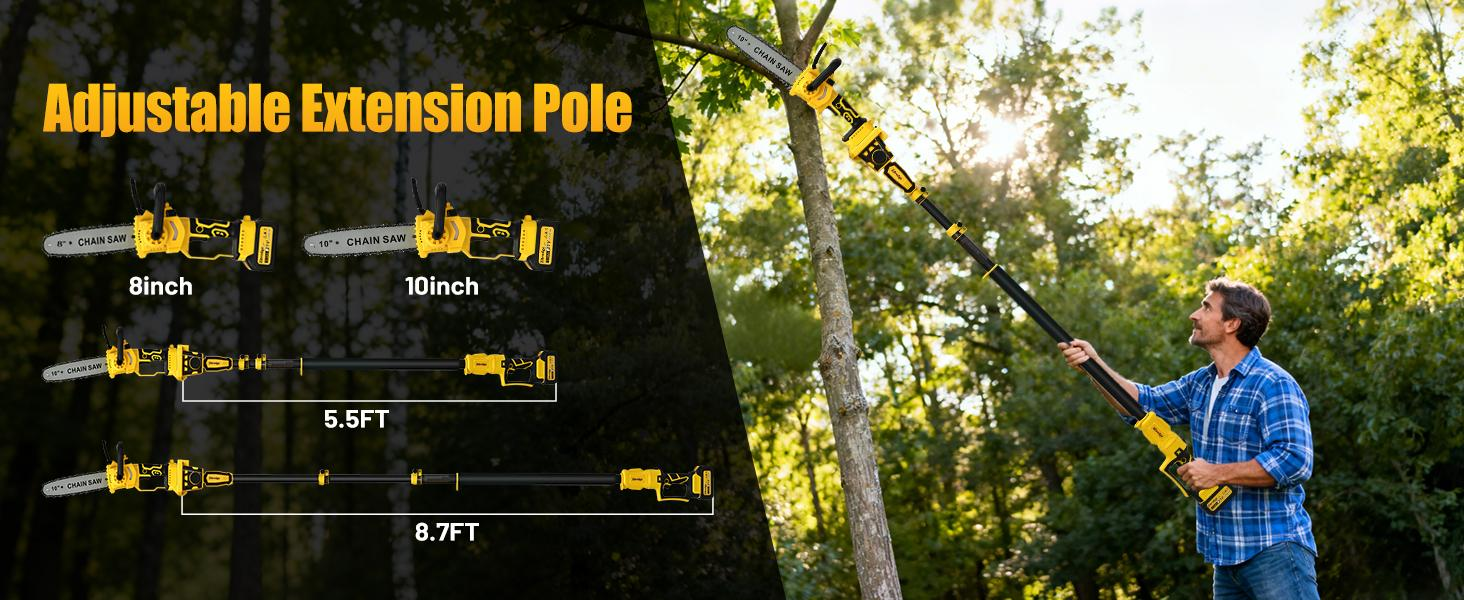
A telescopic pole in the approximate 168-265 cm range can support high-reach work, but maximum reachable height depends on the operator, stance, attachment angle, and safety clearance. Treat any “15 ft reach” figure as an operating reference, not a guaranteed cutting height.
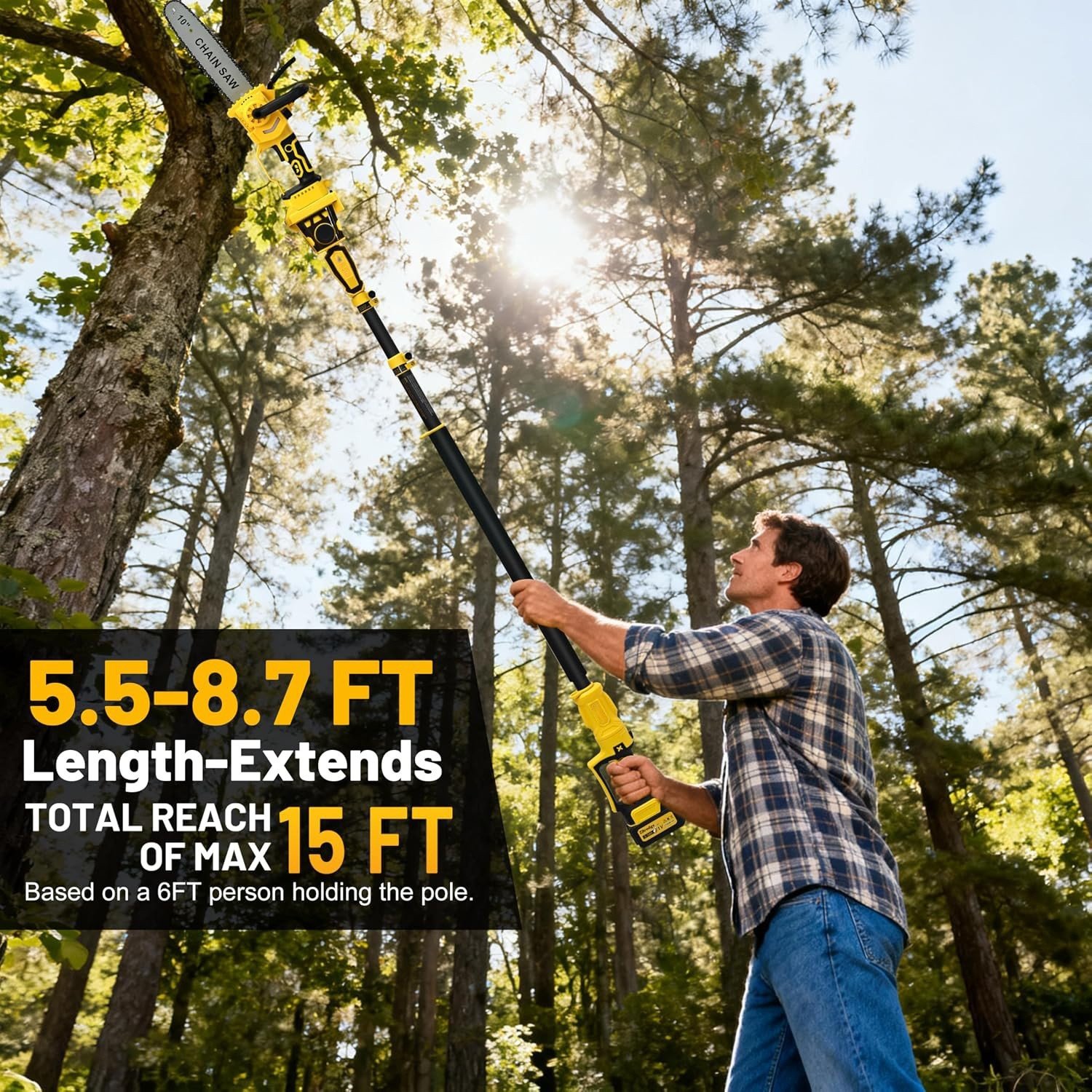
For overhead work, weight distribution often matters more than the bare module weight. The product information for this kit lists approximate module weights of 1.45 kg for the mini chainsaw, 2.59 kg for the pole saw, and 2.81 kg for the pole hedge trimmer. Verify these figures on a sample with the battery and pole fitted, then ask operators to assess balance and control at full extension.
5. Test the hedge-trimmer head and cutting system
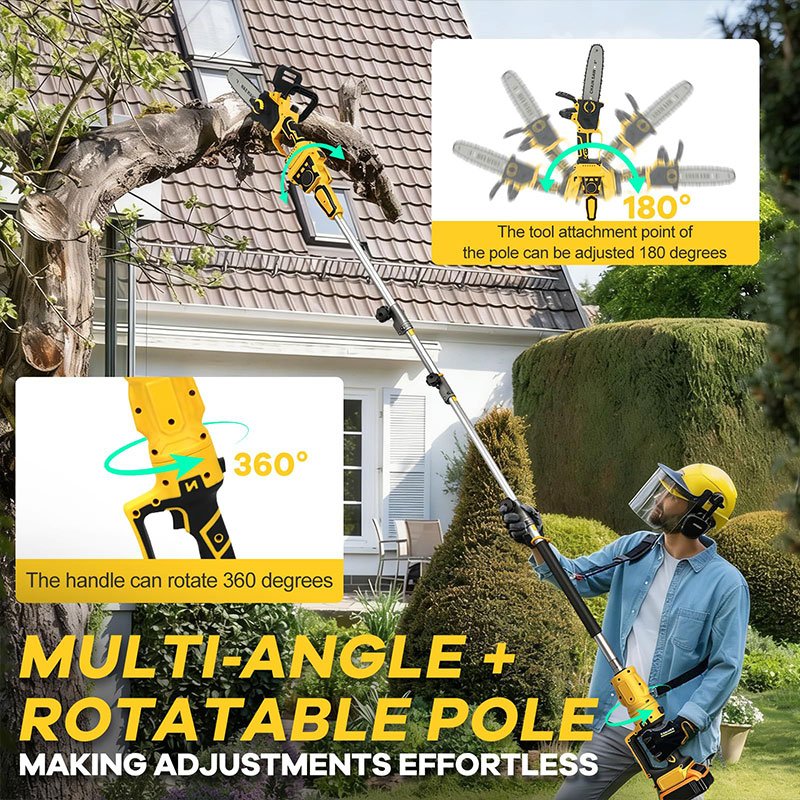
A 180-degree adjustable head can improve access to horizontal, vertical, and angled hedge surfaces. During evaluation, check the adjustment range, detent strength, locking reliability, and whether the head remains stable under load. Record the maximum branch diameter and the recommended duty cycle from the supplier rather than inferring performance from blade length alone.
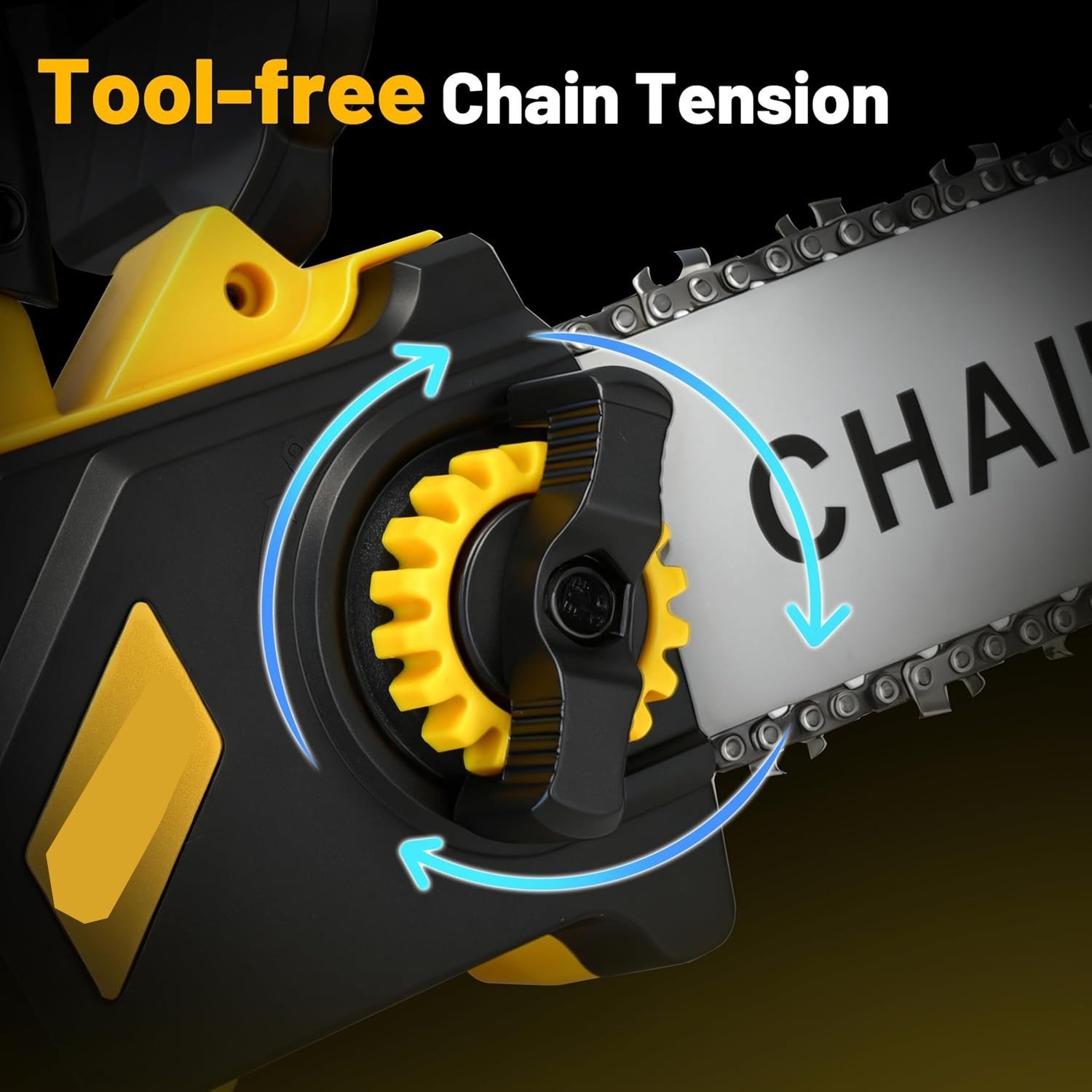
For the saw attachment, a 10-inch guide bar can be a practical format for light branch work. Confirm the guide-bar material, chain specification, chain speed, lubrication method, and approved cutting diameter. If the kit includes tool-free chain tensioning, test it repeatedly and include the adjustment procedure in operator training.
6. Compare total cost of ownership, not just unit price
| Evaluation area | What to verify before a bulk order |
|---|---|
| Battery platform | Battery capacity, number of batteries per kit, charger output, cycle-life data, and interchangeability across models. |
| Wear parts | Availability and lead time for chains, bars, blades, sprockets, guards, poles, switches, and batteries. |
| Serviceability | Exploded parts list, troubleshooting guide, warranty terms, response time, and repair-video availability. |
| Packaging and freight | Inner and outer carton dimensions, gross weight, units per carton, pallet plan, and estimated 20 ft / 40 ft loading quantity. |
| Quality control | Pre-shipment inspection criteria, sampling plan, functional test, label check, and serial or batch traceability. |
7. Run a pilot order before a full rollout
For a new supplier or an untested configuration, begin with a sample or pilot order. Document the actual runtime, attachment changes, cutting performance, packaging condition, and parts consumption. Use this record to finalise the battery configuration, spare-parts package, and quality-control checklist for the larger purchase order.
Bulk-purchase checklist
- Confirm the exact attachment list and product model.
- Verify market-specific compliance requirements and documents.
- Test reach, balance, head locking, and cutting performance with a sample.
- Specify batteries, chargers, spare parts, packaging, and inspection criteria in the purchase order.
- Agree on warranty, service response, and replacement-parts lead time.
- Calculate landed cost, not just ex-works or FOB unit price.
Conclusion
A multifunctional telescopic pole hedge-trimmer kit can simplify fleet management and give crews more flexibility, especially where trimming and light branch cutting happen in the same job. The best bulk-buying decision comes from a configuration-matched sample test, verified compliance documents, a defined service-parts plan, and a realistic total-cost calculation.
Need a configuration or OEM quotation?
Tell us your target market, required attachments, expected order quantity, and branding requirements. Our team can help you compare options for a wholesale or private-label project.
Standards referenced for scope checking: ISO 10517:2019 and ANSI/OPEI B175.6. Always confirm current requirements for the destination market.