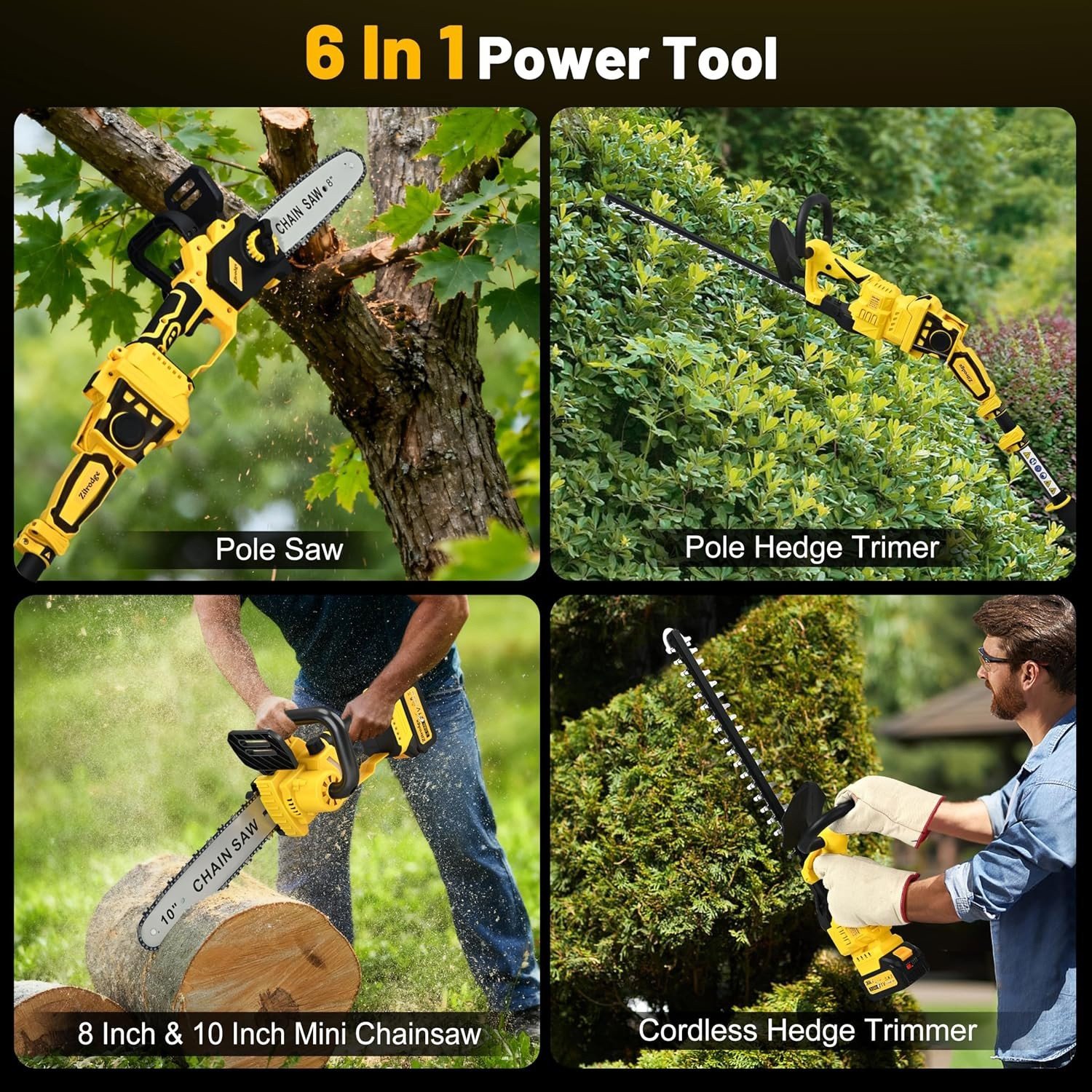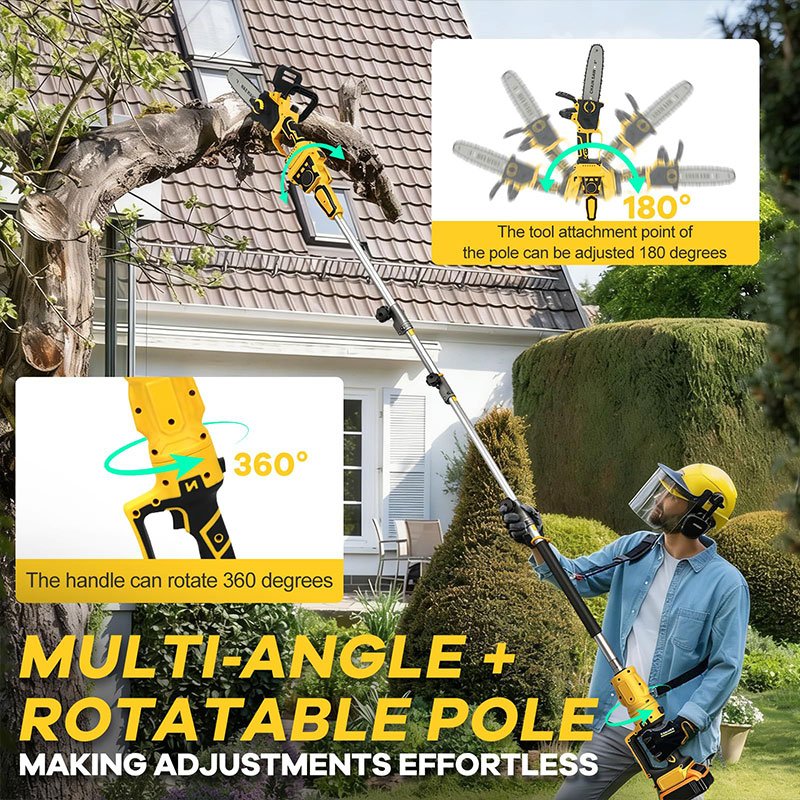
If you have a tree in your yard that’s grown 6 to 10 feet tall and the branches are starting to block sunlight, scrape your roof, or reach toward power lines, you might be wondering: “What tool do I use to trim this?” If you’re wondering what is an electric pole saw, here’s the simple answer: it’s basically a mini chainsaw mounted on a long, extendable pole. You stand firmly on the ground, hold the handle with both hands, extend the pole up high, press the trigger, and let the chain do all the work. The biggest difference between a pole saw and a regular chainsaw comes down to reach. A regular chainsaw forces you to get up close to the branch, which means dragging out a ladder or climbing the tree. That’s what makes an electric pole saw so worth it: you keep a safe distance while keeping both feet on the ground. It solves three main headaches: safety, physical effort, and efficiency. You don’t have to risk a scary fall. You don’t have to exhaust your arms holding a heavy gas engine overhead. And you won’t waste minutes manually sawing back and forth through a thick limb. An electric pole saw can slice through an arm-thick branch in seconds.
How Does a Cordless Pole Saw Work?
Many folks see a cordless pole saw for the first time and ask: “No cord, no gas—how does it drive the chain?” The mechanics are actually pretty simple. Let’s break it down into four steps:
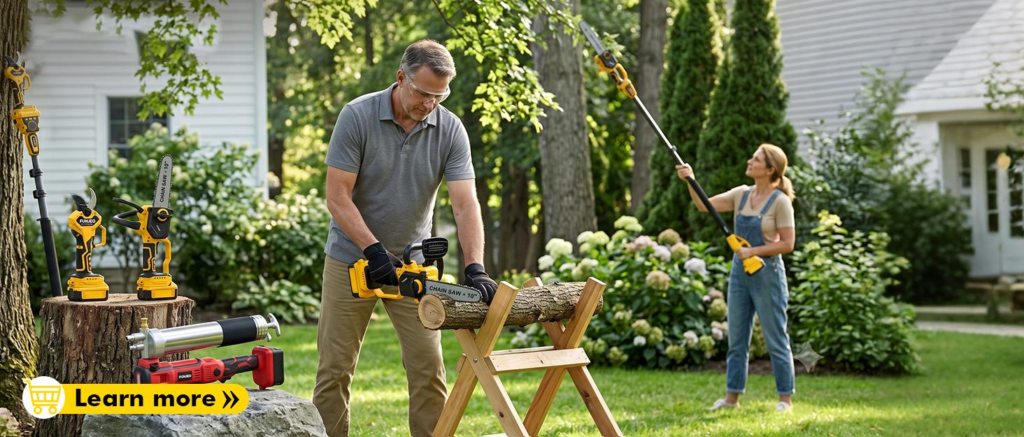
Step 1: Battery power. A lithium-ion battery at the base powers the motor. Most modern cordless models use 20V or 40V batteries. The higher the amp-hour (Ah) rating, the longer your runtime. A standard 4.0Ah battery usually gives you 30 to 60 minutes of continuous cutting time.
Step 2: Motor drive. The motor spins up fast and sends power through a drive shaft inside the pole to the sprocket at the top. You’ll run into two types of motors: brushed motors are cheaper, but they wear out faster and run less efficiently. Brushless motors cost a bit more up front, but they deliver smoother power, run quieter, and last much longer. They are the top choice today.
Step 2: Motor drive. The motor spins up fast and sends power through a drive shaft inside the pole to the sprocket at the top. You’ll run into two types of motors: brushed motors are cheaper, but they wear out faster and run less efficiently. Brushless motors cost a bit more up front, but they deliver smoother power, run quieter, and last much longer. They are the top choice today.
Step 3: Chain rotation and cutting. Driven by the sprocket, the chain slides around the guide bar at high speed. The teeth on the chain act like tiny chisels, slicing through wood fibers layer by layer. You don’t need to push down hard. Just keep the chain spinning, and it pulls itself right into the branch.
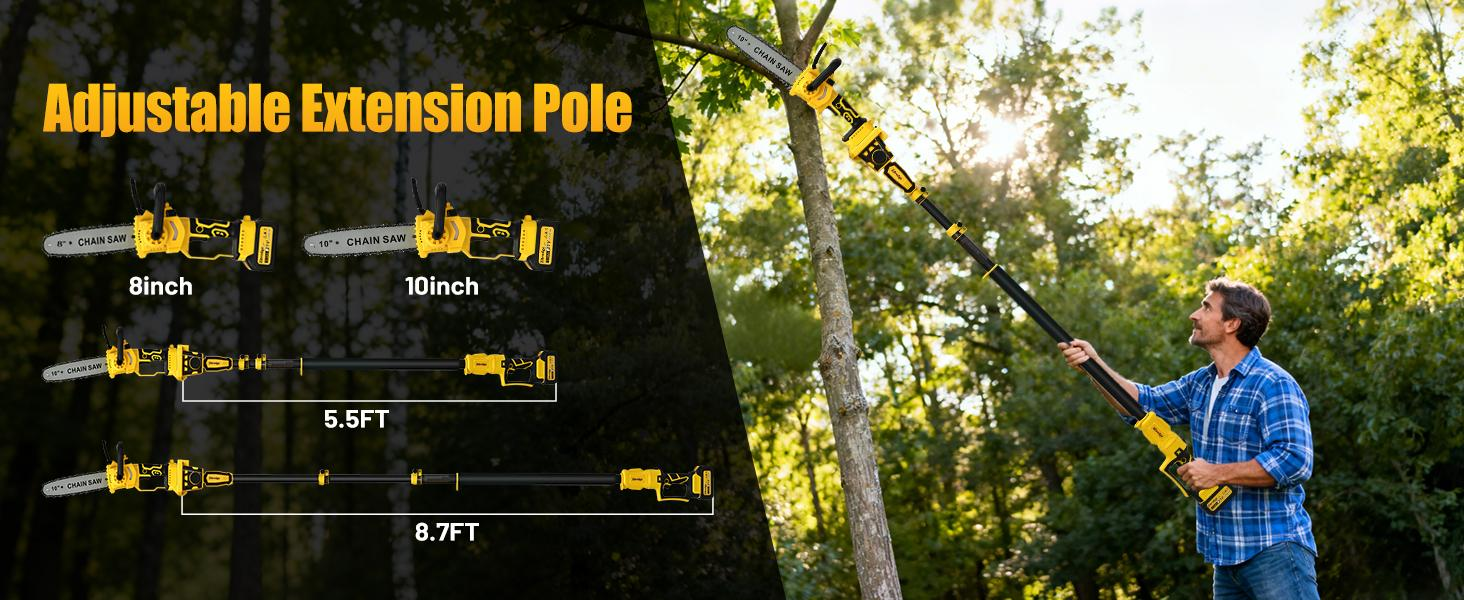
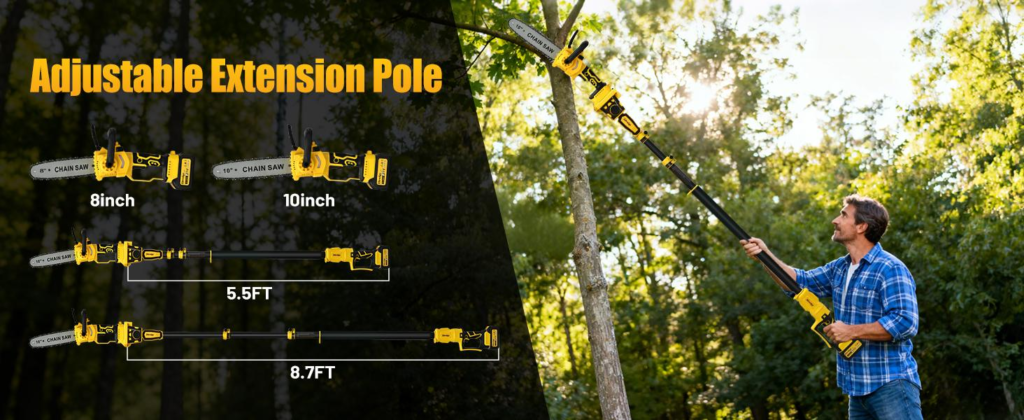
Step 4: Telescoping pole adjustment. Most pole saws extend from 6 to 13 feet. You simply unlock the shaft, adjust the length to match the branch height, and lock it back in place. You only need to control your angle and pull the trigger—the tool handles the rest.
Main Parts of a Pole Saw
Before you buy, getting familiar with these basic specs will help you shop withconfidence:
Telescoping pole/shaft: This determines how high you can reach (usually 8 to 13 feet total reach). A longer pole reaches higher, but it makes the head heavier and harder to hold up. You don’t need the longest pole available—just long enough for your trees.
Motor: The heart of the machine. Prioritize a brushless motor if your budget allows. It delivers steadier power, operates quietly, and lasts longer. Brushed motors work fine for occasional light jobs on a budget.
Guide bar: The metal track the chain slides on. It dictates the maximum branch thickness you can cut. Common sizes are 6, 8, and 10 inches. A 6-inch bar handles light twigs, an 8-inch bar is the most versatile for home yards, and a 10-inch bar tackles thick limbs (though it adds noticeable weight).
Chain: The business end that makes the cuts. Chains need regular tensioning and chain oil, or they can slip off or wear down fast. A good chain cuts fast, leaves clean cuts, and lasts longer.
Electric vs. Gas vs. Manual Pole Saws
Choosing between these three options is the most common dilemma forbeginners. Here’s the bottom line:
Manual pole saw: The cheapest and lightest option, but it relies 100% on muscle power and gets exhausting fast. Great for snipping one or two thin branches once in a blue moon.
Gas pole saw: The most powerful option for cutting thick trunks. However, it’s heavy, loud, produces smelly exhaust, and requires high maintenance—you have to mix fuel, change spark plugs, and clean carburetors. Best for professional landscapers or heavy farm work.
Electric (cordless) pole saw: The sweet spot for home yards. It’s quiet, emission-free, starts with a button press, and requires minimal upkeep. Unless you’re felling thick tree trunks every day, this is the most hassle-free pick. It offers moderate weight, fair pricing, and the best user experience. If you’re reading reviews, focus on brushless motors and battery life.
By weight: Manual is lightest, electric is moderate, and gas is heaviest.
By noise: Manual is silent, electric is quiet, and gas is loud.
By maintenance: Manual needs almost none, electric just needs chain oil, and gas needs routine engine servicing.
By price: Manual is cheapest, electric is mid-range, and gas is high-end.
Best use case: Manual for quick, thin trims; gas for pro logging; electric for backyard trees and orchard pruning.
Who Uses a Pole Saw?
Homeowners: Tree branches grow fast. They block natural light, scrape siding, or crowd power lines. A pole saw lets you tackle the job yourself—no hiring expensive pros, no climbing ladders.
Gardening enthusiasts: If you love keeping your yard looking neat, a pole saw makes routine canopy trimming fast and effortless.
Fruit tree growers: Pruning fruit trees is an annual task. Reaching high branches improves air circulation and sunlight exposure, which boosts your fruit yield.
Property maintenance crews: For trimming trees in residential neighborhoods or green spaces, a cordless electric model starts instantly and keeps noise down for neighbors.
Anyone who wants to avoid ladders: This is the biggest group. Falling off ladders while pruning causes thousands of injuries every year. The core value of a pole saw is letting you do high work with both feet on the ground. If you’re looking for a pole saw for tree trimming, safety should be your first consideration.
WindRider 200K Cordless Pole Saw
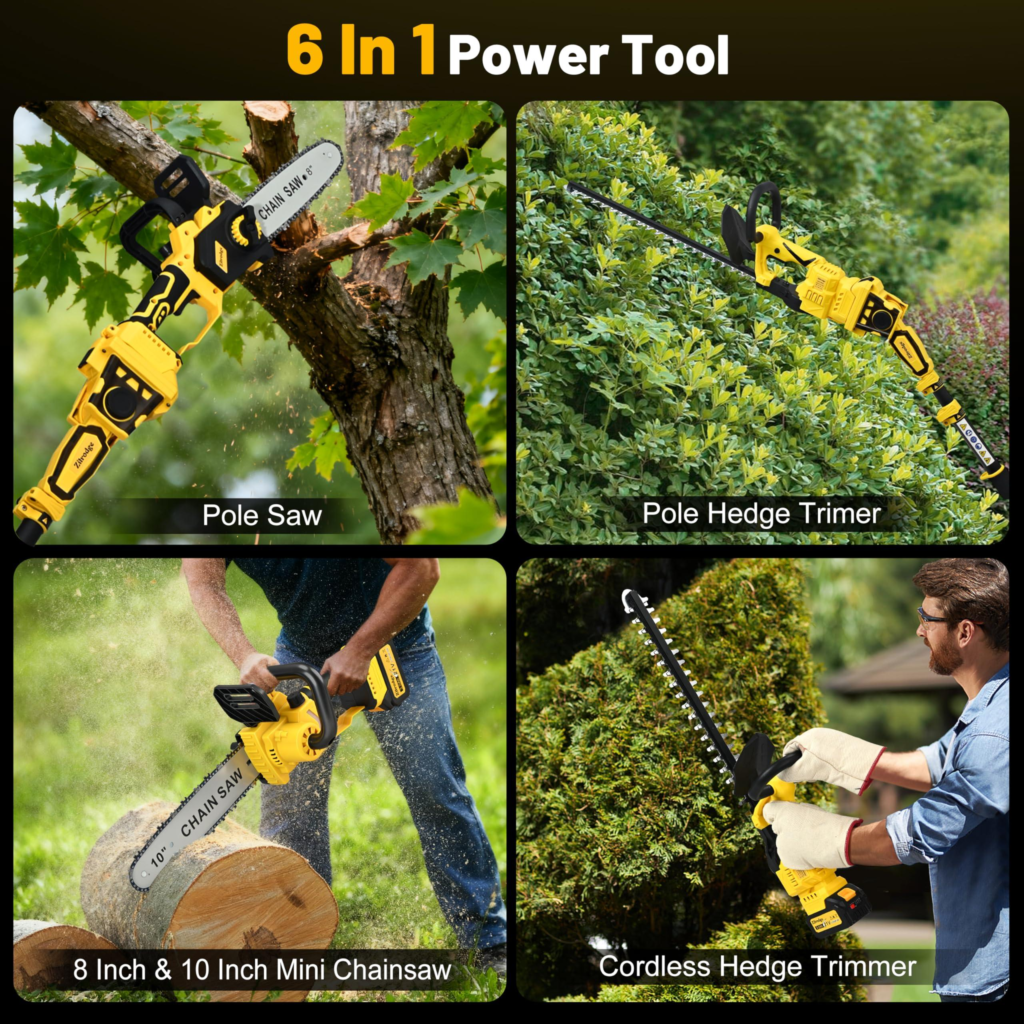
If you’re ready to get a cordless electric pole saw but aren’t sure which one to choose, check out the WindRider 200K Cordless Pole Saw.It’s a beginner-friendly model built around three common pain points: heavy weight, awkward reach, and short battery life. The entire saw weighs just 7.5 lbs, so your arms won’t burn out even after 20 or 30 minutes of overhead work.The telescoping pole extends smoothly from 6.5 ft up to 10 ft and locks securely, covering most backyard trees without needing a ladder.
It runs on a brushless 20V 4.0Ah lithium-ion battery that gives you up to 45 minutes of continuous cutting time—more than enough to clear a typical yard in one session. Its 8-inch guide bar easily cuts through branches up to 6 inches thick, which covers almost everything around the house.
There’s no steep learning curve either. Charge the battery, lock your pole length, squeeze the trigger, and start cutting. No gas mixing, no yanking pull cords, and no mechanical headaches. It skips gimmicks and focuses on what matters: keeping things safe, light, and easy to use. If you want a tool that makes high-reach pruning simple, the WindRider 200K is a great first choice. If you’re still comparing the best pole saw options, factor in weight, battery compatibility, and after-sales support.
Final Thoughts: How Should Beginners Choose?
If you only trim a thin twig every couple of years, a manual pole saw will do. If you cut thick trunks every day, a gas saw has the raw horsepower you need.But if you’re a homeowner, gardener, fruit grower, or property manager who wants safety, quiet operation, and total convenience, a cordless electric pole saw is the ultimate balance.
Remember three rules when shopping: prioritize a brushless motor, pick a brand with swappable batteries, and choose a total weight you can comfortably hold overhead. Get those three right, and you’ll love your choice. At the end of the day, understanding what is an electric pole saw isn’t just about tool specs—it’s about finding a safer, easier way to care for your yard.