
The Short Answer: Yes, If They Fit the Work You Do
So, how good is a battery powered pole saw? In my experience, it depends on what you need it for. If you have a couple of fruit trees and some tall shrubs to trim a few times a year, it makes upkeep much easier. If you’re cutting thick limbs or doing heavy tree work every day, it’s a poor fit. Before buying, be clear about whether you’re maintaining your yard occasionally or using the tool to make a living.

Battery Powered Pole Saw Pros: Light Weight, Less Noise, and No Exhaust
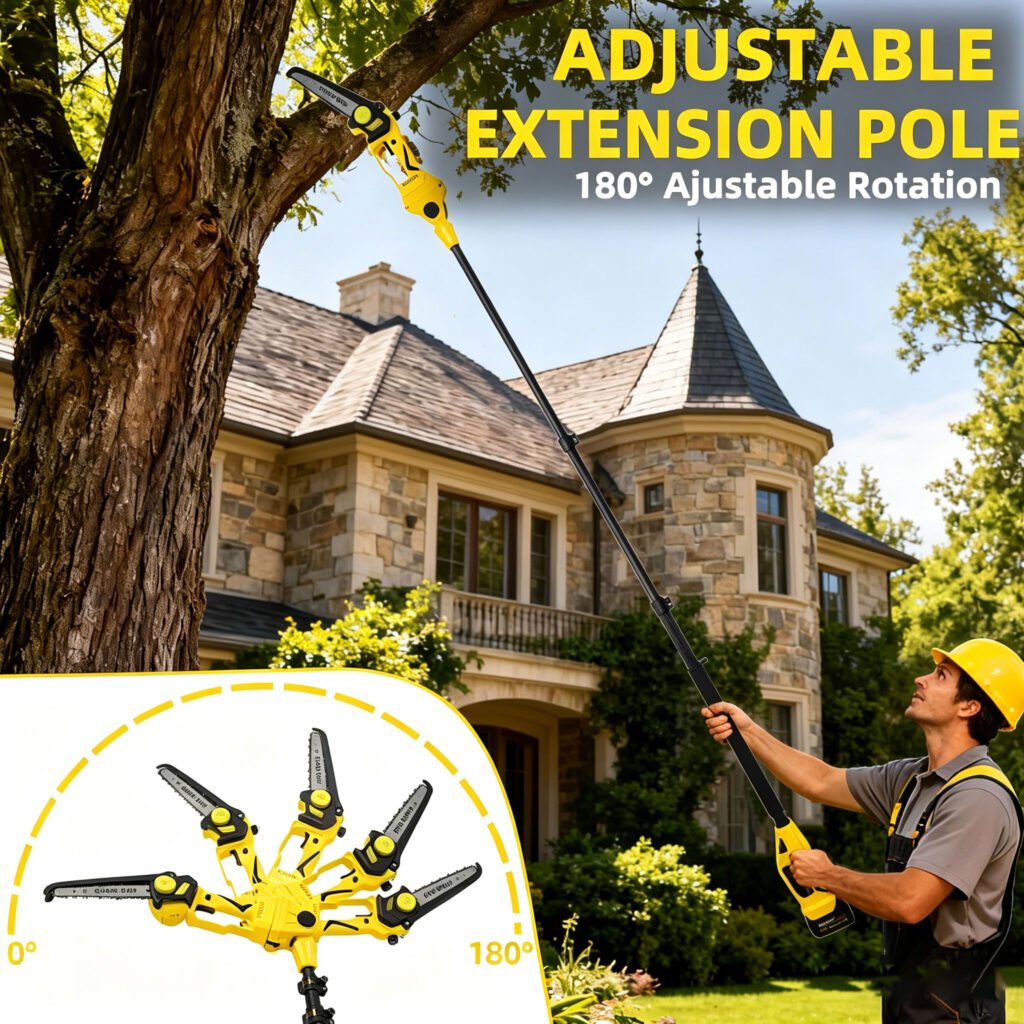
The first thing I noticed was the weight. The saw body weighs 1.2 kg, and the pole itself weighs 1.9 kg. I found it much easier to lift than a gas saw. The telescopic pole adjusts from 120–280 cm, letting me reach branches roughly 3–4 meters high from the ground, depending on my working position, without constantly moving a ladder.
The lower noise level and lack of exhaust are welcome, too. There’s no gas engine roaring away, so morning or evening trimming feels less disruptive to the neighbors. Starting it takes a switch instead of a pull cord—a real plus if you find gas tools hard to start.
Maintenance is simpler as well. There’s no fuel to mix, spark plug to replace, or carburetor to clean. Wiping it down and charging the battery are straightforward parts of putting it away. With 18V power, a 600W rating,and a no-load speed of 4,300 rpm, it responded quickly on ordinary branches and left clean cuts in my use.Those are the everyday benefits that stood out most.
Battery Powered Pole Saw Cons: Runtime and Power Limits
The drawbacks deserve just as much attention. Runtime was the biggest limitation for me. When I was cutting thicker branches continuously, a battery lasted roughly 20–30 minutes before I needed to swap it.For a larger pruning session, I’d keep a second battery ready.
There’s also a limit to the cutting power. The rated maximum cutting diameter is 20 cm, but I’d treat that as an upper limit under favorable conditions. On hardwood or wet wood, especially thicker, arm-sized branches, cutting slowed noticeably. Trying to force the saw through made it more likely to bind.
With the pole fully extended, I also noticed some movement at the saw end, so you need both hands to hold it steady. These are common trade-offs with this type of cordless pole saw, rather than concerns unique to this model.
What Jobs Is a Battery Powered Pole Saw Good For?
Based on my experience, these are the jobs it handles best:
• Routine fruit tree pruning: It cut smoothly through water sprouts and crossing branches on apple, pear,and citrus trees, particularly branches under 10 cm in diameter.
• Tall shrubs and hedges: Paired with the compatible 20V hedge trimmer, the kit can also handle shaping higher growth.
• Post‑storm branch cleanup: handles small‑to‑medium broken branches within easy reach, no need to wait for a tree service.
• Awkward spots and higher branches: The telescopic pole is especially useful where setting up a ladder would be difficult.
Its sweet spot is occasional to moderately frequent pruning of small to medium branches above normal reach. That’s where I think a battery powered pole saw earns its place in a garden tool collection.
What Jobs Can’t a Battery Powered Pole Saw Handle?
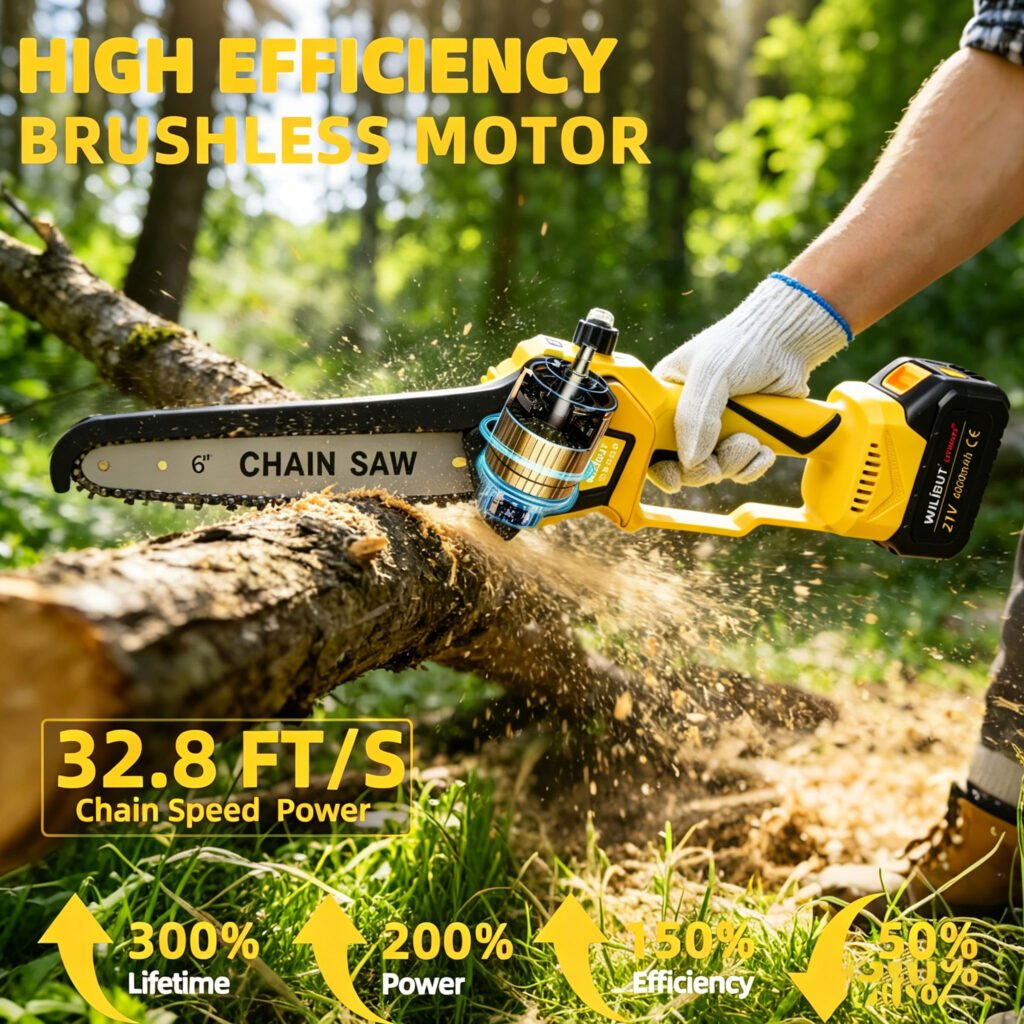
I wouldn’t expect this saw to replace a gas chainsaw. Mature hardwood limbs beyond its 15 cm cutting capacity and hours of continuous heavy cutting are outside its intended role. Clearing large wooded areas or felling whole trees calls for a gas saw or a professional-grade chainsaw. It’s also a poor match for extended commercial work, where frequent battery swaps can slow the job down. Knowing those limits helps avoid buying the wrong tool.
Is a Rechargeable Pole Saw Worth Buying?
For a typical yard that needs pruning anywhere from a few times to a dozen or so times a year, I think it’s worth considering—especially if your priorities are less physical effort, working from the ground, and simpler maintenance. It cuts down on ladder use and eliminates extension cords and gas fumes. The straightforward controls also make it less intimidating for other adults in the household to use.
For professional tree work or heavy cutting, though, I’d keep the gas saw and use the cordless model as a supporting tool. Whether it’s a good purchase comes down to the work you actually do.

About the kit I tested: This multipurpose cordless pole saw kit is built around the 200E saw, rated at 18V and 600W, with a maximum cutting diameter of 20 cm. The saw body weighs 1.2 kg, and its no-load speed is 4,300 rpm. The matching telescopic pole adjusts from 120–280 cm and weighs 1.9 kg, allowing you to tackle higher branches from the ground. The kit also works with a 20V hedge trimmer for tall shrubs and hedges. If you want a relatively lightweight, approachable setup for a range of routine pruning jobs around the yard, this combination is worth a look.
Frequently Asked Questions
How long does a battery powered pole saw last on one charge?
In real-world pruning, a typical 18V battery powered pole saw runs about 20–30 minutes of continuous cutting on medium branches. Light trimming can stretch that to 40 minutes. Keeping a second battery on hand is the easiest way to avoid downtime.
Is a battery powered pole saw safer than a gas chainsaw?
A cordless pole saw is generally safer for occasional use because it starts with a switch, runs quieter, and has no pull-cord recoil risk. For professional safety guidance, see the OSHA chainsaw safety guidelines. Always wear eye protection, gloves, and proper footwear, and keep both hands on the pole when cutting.
What is the maximum height a battery powered pole saw can reach?
With a telescopic pole extending to around 2.8 m plus the length of the saw and your own reach, you can comfortably trim branches roughly 3–4 m above the ground. For taller trees, a ladder or a professional service is still the safer choice. Learn more about the tool type on Wikipedia.
Bottom line: for yard maintenance, fruit tree pruning, and post-storm cleanup, a quality battery powered pole saw is a practical, lightweight, and low-noise tool. Buy the 200E kit if your workload matches its sweet spot; go gas-powered only if you need all-day heavy cutting.


